Ergonomic Chair Seat Recline
Very few people sit completely still in their chair. This is actually a positive, considering that movement not only relieves pressure to the spine, but also facilitates blood flow. The best part, is that a recline range of only 20% can actually reduce total spinal stress by up to 40%.
Obviously the best recling options are going to be a chair that has the most options. In this case, this means a reclining portion that pivots, locks, manages overall tension level, is easy to adjust. Not every chair is like that though. Reclinability can be broken down as follows.
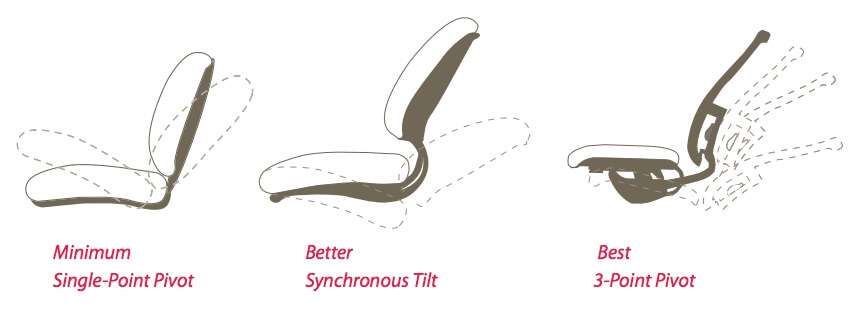 1. A GOOD Ergonomic Chair : Single Point Pivot
The back of the seat will move a limited amount based on the location of the seat pan. This is only slightly different then a fixed back chair. Unfortunately, the front of the seat pan will sometimes rise along with the back of the chair. This causes pressure underneath the user’s legs.
2. A BETTER Ergonomic Chair: Synchronous Tilt
This is extremely similar to a single pivot reclining mechanism. However, this type of chair has the added benefit of the back of the seat being connected to a mechanism in the rear of the seat. This means that when the seat goes back, the back of the seat pan slides down. This prevents increased pressure on the bottom of the legs.
3. The BEST Ergonomic Chair: 3-Point Pivot
This is basically the synchronous tilt mechanism with a higher level of fine tuning. Not only will the seat pan move in relation to the seat back, but it also maintains a consistent level of lumbar support regardless of recline level.


Leave a Reply